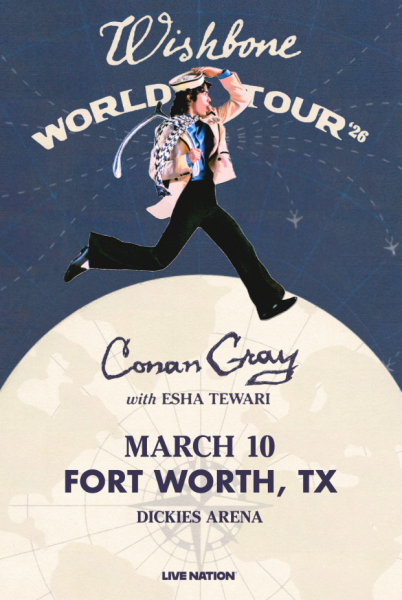
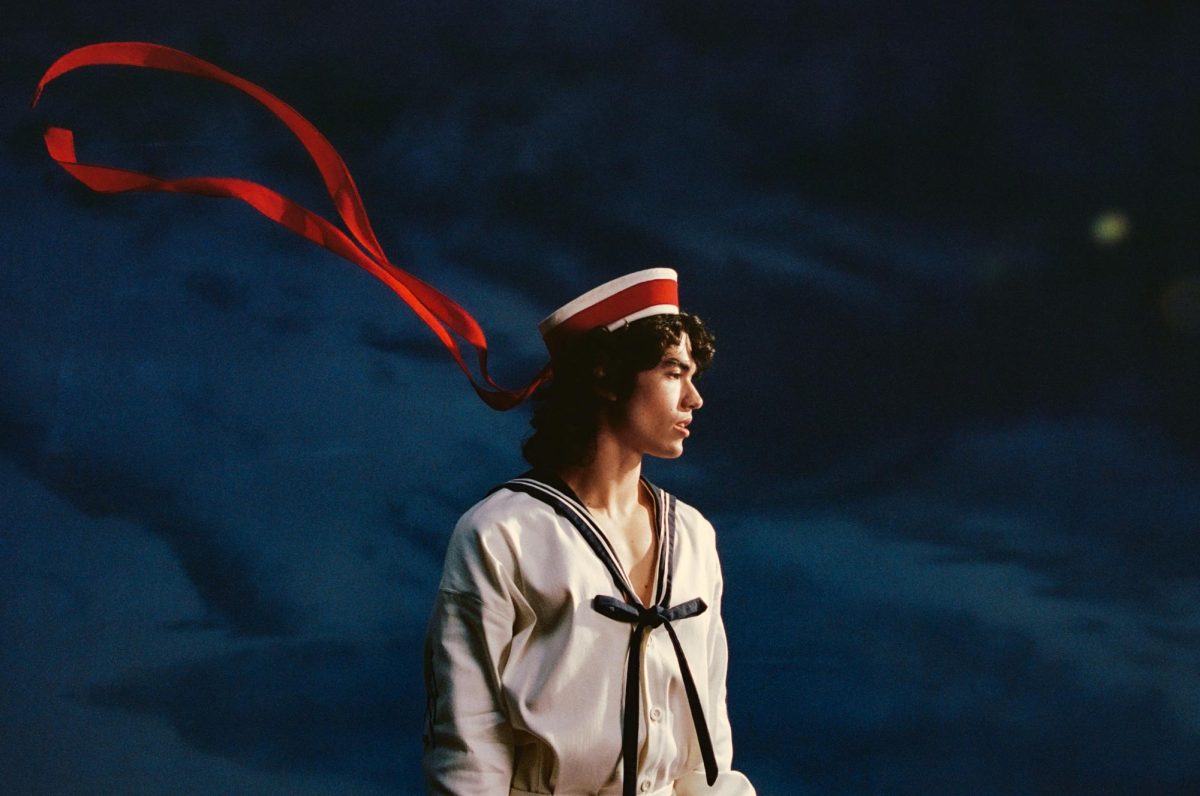
 Whether you know him from his hit single “Heather” released and popularized in 2020 (which has become one of a handful of songs with two billion streams penned by one writer – Conan himself), or you find yourself bopping your head to one of his newer singles and albums, Texas native Conan Gray has spent his last eight years producing music and making quite the name for himself. Gray has recently turned the page to his next chapter with his fourth studio album and tour.
“Wishbone,” released on Aug. 15, 2025, could arguably be one of his best works we’ve seen. This new album focuses on Gray’s most recent, failed relationship (previously the focal point of “Found Heaven,” his last album). “Wishbone” is Gray’s most honest work yet, a vulnerable account of a specific heartbreak and the deeper issues that influenced it, presented through a compelling narrative of two young men falling in and out of love. Slightly time-jumpy, the audience is thrown into the slew of emotions the character has felt over the past months, creating a unique listener experience.
The title and imagery symbolize luck, fate and the unfortunate reality that in a wishbone break, one person always loses, reflecting the doomed nature of this relationship. This album perfectly and effortlessly illustrates the progression of young love, from yearning to the honeymoon phase, down to the realization that something is not right and the aftermath and grief following the death of that relationship, even if it isn’t over yet.
Gray really plays with fictionalized reality in this album in a way we have never seen before from him. Songs like “This Song,” “Vodka Cranberry,” “Actor” and “Caramel” tell a story within a fictional world (Wilson & Brando being the characters portraying Gray’s mental experience) that mirrors Gray’s real-life experiences, as seen in his (incredibly well-produced) videos with actor Corey Fogelmanis. There are also some intense themes later in the track list, such as Gray reflecting on some of his childhood memories and trauma. Gray connects his past difficult experiences, especially with his father, to his romantic patterns, as seen in songs like “Connell” and “Class Clown.”
Track by track
“Actor”
This emotional tangle of a chord progression and some intense studio production gives listeners a beautiful rendition expressing the challenges of a hidden relationship. Gray reflects on the intense mental battle and emotional difficulty in navigating a hidden relationship, leaving listeners with what some would like to call an Aftermath Masterpiece. This was a really great choice to open and introduce listeners to the album, and it introduces the general themes of the album incredibly well. This track is an emotional ballad- but not boring. Picking up after the first chorus but starting emotional and raw, this leaves the listeners with an intense sense of empathy due to Gray’s genius lyricism.
Storytelling is a very common style used in Gray’s music and has remained consistent over the years, which we see him regularly produce. The chord progression is catchy and repetitive, excluding the bridge, but it leaves a lot of room to spice up the song and not leave it bland. This song is produced with a lot of intentional details in the music aspect of it. The song starts mostly acoustic, with traces of quiet violins in the background, and some light backing vocals. After the first chorus, the drums pick up, and while the story progresses, the strings get louder, and the melody gets shouty and more interesting. Gray is known for packing so much raw emotion and feeling into the way he sings; his vocals really reflect the transparency of the writing style he has. Immediately, there is a stark contrast from his previous record that listeners get straight in, even in the introduction to the album.
His last album, “Found Heaven,” was very 80s themed and bright. He played with a bright, poppy synth in every one of the tracks on that album. This alone was a complete 180 from his usual ‘sad boy’ acoustic, piano, ballad-style songwriting he’s stuck to since 2019, so it’s very abundantly clear how this album already feels like almost a combination of his two distinct eras of writing.
“This Song”
The yearning and pining captured in the lyrics, the whiny violins, the electric bass drums in the pocket of the downbeat and Gray’s free and shouty chorus are something of a masterpiece. Even the music video captures the feeling of yearning for a love you may never feel again with absolute perfection. Though the emotional, raw and somewhat melancholy lyrics, as well as the violins, give the impression that this is a depressing song, it’s actually a beautiful pop ballad.
The mood of the song is achieved by choosing a major chord progression in lieu of a minor one and a powerful bass line. The song is conducted at a steady mid-tempo, and it’s very interesting that Gray kept the song without the addition of a bridge. Adding a bridge, which commonly has a change in chord progression and melody for a few bars, would interrupt the trance he has his audience in while listening to his unfiltered flow of emotions and the story he is telling us. The powerful instrumental section at the end candidly captures the sounds that happen in your brain when you’re falling in love.
This track in particular, especially being one of the only songs written before the relationship, gives the listener an intense feeling of wearing ‘rose colored glasses.’ After listening to “Actor,” the audience knows that this relationship does not end well, and the character in the fictionalized reality is not treated well in this relationship. This, however, does not impact the haze and almost fog the song puts the listener into, and that is very powerful and a sign of some genius songwriting and musicianship.
“Vodka Cranberry”
The most popular song on “Wishbone,” this gut-punch mid-tempo ballad captures dizzy, messy feelings of emotional whiplash after reuniting with an ex. Gray manages to keep up with building intricate melodies, slightly changing throughout the entire song. His mind-blowing vocal range has captured his audience for years, and this song really shows just how impressive his intonation truly is. This song is slightly simpler, while still telling a compelling story and maintaining a catchy chord progression. This track plays with themes of mourning a relationship while you’re still in it; knowing it’s over before it ends. The well-loved violins come back while Gray tells listeners in his captivating musical language how he knew he (or the character reflecting his personal experience) had to end the relationship with someone he still loved very much. The bridge and belty pre-chorus before the last closing chorus represent the freeing scream of someone who has built up pain and tension for years, due to a toxic partner.
“Romeo”
Instead of violins, in this track, we are introduced to the rest of the band. A shocking trumpet fanfare intro throws the audience into a twangy acoustic guitar progression, which could almost be called country. This song could be considered a callback to his southern Texas roots and the music Gray grew up listening to. There is a theory that this also could be a symbol of going back to your roots and your priorities after the end of a toxic, romanticized relationship, which is what this song is about. “Romeo” depicts a narration from a timeline where the writer was in love with someone who was just experimenting with homosexuality and was deeply hurt. This upbeat track feels very free and almost like claiming back your confidence and sanity. Gray declaring his revenge and moving on from whatever he let hurt him feels like a refreshing realization, especially from an artist notorious for wallowing in his emotions. This is less emotional, instead more of a reflection and a throwaway of everything he’s let control him and how he feels.
This song is also a very clear allusion to Shakespeare and the previously mentioned ex being an actor. In the first track of the album, “Actor,” he alludes to the possibility of this, but it can be written off as a metaphor until hearing the lyrics of “Romeo”. Similarly, the Shakespeare allusions in this song are rampant, with the obvious being ‘Romeo’ and even small lines such as “Where art thou?” and “..Your egoist actor friends.” As a whole, this song contributes to the album by adding diversity in the genre and sound and also solidifying the illusion for the listener that the album was written about some type of star.
“My World”
Gray’s “My World” is an anthem about reclaiming your life, embracing your insecurities and realizing in your mid-twenties that, for the first time, nothing matters—including the judgment of others. This represents a shift from living for others to owning your own personal world. It focuses on finding confidence, letting go of the need for approval, and taking ownership of one’s life and identity—with themes of coming to terms with Gray’s sexuality, though he chooses not to outwardly label himself. In interviews and on social media, he’s emphasized that he wants to live authentically without having to conform to specific terms. So, while Coneheads often speculate based on his lyrics or public persona, he has chosen not to define his sexual orientation publicly. Due to the lyrics “It’s my girl and it’s my guy, I’ll kiss ‘em if I like,” he’s speculated to be bisexual, but this song is less about sexuality and more about expressing yourself freely. While listening, you get a feeling adjacent to running and screaming in a field at sunset, completely free. The synth addition to the song was a really nice touch, as well as a powerful key change after the bridge. Not the best song on the album, but the meaning can be appreciated.
“Class Clown”
This song is a refreshing, yet melancholy pivot from the main themes of the album. Rather than being about love and loss, it’s about Gray’s childhood and the hurt he still buries deep from the way he was as a child. With intricate melodies and beautiful half steps in just the first verse with an acoustic guitar, we immediately get a vibe that is sort of bouncy and playful; it almost feels like recess as a kid. A common trend in Gray’s music, it picks up with big echoes and electric drums after the first chorus, though the bouncy and plucky half-stepped guitar stays throughout the song, similar to what he sings about, “everything com[ing] back around.”

“Nauseous”
“Nauseous” is a raw exploration of fear, vulnerability, and the tendency to self-sabotage relationships due to past trauma and a fear of abandonment. This song highlights the paradoxical safety found in “bad” partners, preferring guaranteed pain over the vulnerability of being loved by a kind person. The song reflects on how Gray’s fear leads to rejecting healthy love and settling for toxic situations. The feeling of equating intimacy with danger is an incredibly raw thing to write a song about, which should be admired in itself.
Essentially a confession in song form, the battle Gray expresses, struggling to trust a romantic partner and figuring out how to live and function again after a traumatic experience is incredibly emotionally transparent. Lines such as “Your love is a threat, and I’m nauseous” and “Maybe that’s why I feel safe with bad guys” convey a visceral and naked sensation from both Gray and the listener. This is brilliantly matched and produced with mainly piano and acoustic guitar, but as the song progresses, we have a lot of reverb and Gray’s signature belty bridge and choruses, some halftime drums, and a lot of cool down and electric bass towards the end of the song. “Nauseous” is one of the most lyrically open and authentic songs on the album.
“Caramel”
One of the most upbeat songs on Wishbone, tempo-wise, “Caramel” explores the bittersweet, nostalgic and often toxic tendency to romanticize past relationships. It describes how, over time, painful memories “caramelize” and become sweeter, making it difficult to let go of a person who previously caused hurt. In a previously filmed video from the HOT 99.5 Jingle Ball red carpet, Gray explains that, much like cooking sugar into caramel, memories can become distorted and feel sweeter over time, even if they were originally unhealthy or bitter. The song uses sensory details like “cigarette breath” and “coffee grounds” to highlight how small, mundane, or even negative things can trigger overwhelming, warm memories, making the past seem better than it actually was. Using quick, almost-rap-like lyrical moments conveys the fast-moving mind flooding with memories when triggered. Starting with a punchy drum intro, the repetitive chord progression and melody make this a very catchy song and overall a great addition to the album.
“Connell”
Starting with a plucky and melancholy guitar riff and a lightly incorporated violin that gets louder as the song progresses, “Connell” might make you cry. Around two minutes and 30 seconds into the song, there’s a complete 180 from the slow and melancholy guitar and raw vocals to a beat drop, a bass drop, some intense reverb and an almost rock-sounding amp with an electric and bass guitar. The tempo stays the same the entire song, making it powerful and almost grunge. A song about heartbreak, self-blame and toxic relationship patterns, deeply inspired by the character Connell Waldron from Sally Rooney’s novel “Normal People,” “Connell” explores loving someone who lacks effort, with Gray admitting to staying with people who make him feel worthless due to childhood trauma.
Gray mentions his father, alluded to be an alcoholic in many lines of the song, including “You remind me of my father, slurring words.” A lot of this song is set right in his breathy, head voice tone, which is something we haven’t really seen or heard from Gray since the release of his album, “Superache.” back in 2022. Though he has really gotten into showing off his emotional and belty/shouty choruses, Most of the audience can confidently say that his head voice is refreshing and we’ve missed it.
“Sunset Tower”
Severely underrated on this album, “Sunset Tower” is an emotionally raw ballad about the agony of watching an ex-partner move on while remaining trapped in the heartbreak. It explores themes of denial, jealousy and the painful, conflicting desire to know about an ex’s new life despite wanting to forget them. Gray hesitates to explore his range in this song and sticks to his lower register, yet another refreshing change for his audience to listen to from him. The song is named after the historic, luxury Art Deco Sunset Tower Hotel in West Hollywood, which could be considered a very intentional work because it highlights the stark contrast between the glamorous setting and the personal, messy reality of the breakup. We almost get traces of his last album in this song; the 80s-style synth and major chord progressions are reminiscent of “Found Heaven,” with a slightly dejected and sorrowful undertone. You can bop your head to this song, knowing that Gray mourned this relationship in a truly beautiful way.
“Eleven Eleven”
Starting with an acoustic guitar and a raw verse, Gray’s breathy and complex harmonies quickly find their way into this song. “Eleven Eleven” is a melancholic ballad about the inability to let go of a past love, centering on the obsessive hope that a lost relationship will return. Using the 11:11 ritual as a metaphor, the lyrics express a stubborn refusal to move on, wishing for the person even after they have moved on already. Similar to “Sunset Tower,” Gray reflects on knowing the person he loved has moved on and that he holds resentment in his heart towards them for that, but this song is more of a yearning than an apathetic approach. Violins and his signature chesty and resonant descant find their way back into the song around the bridge and outro, coming to an orchestral end. Poetic and metaphorical, “Eleven Eleven” is another underrated track on this list. Listeners can really enjoy the complicated, yet repetitive melody Gray wrote for this song; it leaves a lot of room for him to show off his impressive vocal flips.
“Care”
As the last song on the album, “Care” sends listeners out with a bang. This upbeat, yet emotional pop ballad really closes out the musical vibe of the album. “Care” explores the complicated, messy in-between of post-breakup life, where one feels both liberated and lingeringly attached. It addresses the contradiction of being “over” someone while still caring for them and feeling pain seeing them move on with someone new. It acts as a final, vulnerable admission that, despite wanting to move forward, a part of him still cares deeply. It really acts as a mixture of all the emotions expressed in the album, providing a truly bittersweet closing to the record as a whole.
His most focused album so far, Gray’s Wishbone, is a raw, diary-like exploration of heartbreak, serving as a mature and cohesive artistic step forward that blends indie pop with raw emotional vulnerability. The album acts as a therapeutic narrative, capturing the messy, complex transition from pain to final, bittersweet acceptance. Musically, the album relies on tender, guitar-driven, and heart-wrenching soundscapes, with brutally honest lyrics exposing a significant, personal, and artistic triumph that successfully defines a new, more intimate era of Gray’s career.